



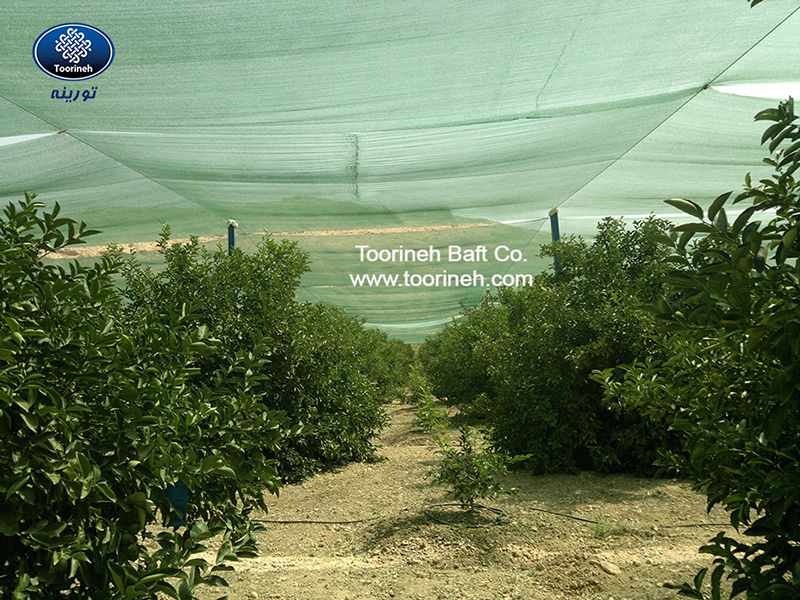
Gradual Temperature Regulation During Sunny Winter Days Using Shade Netting
1- Even Distribution of Sunlight
Shade netting, with its standard mesh structure, allows sunlight to be distributed evenly across the growing area. This reduces harsh shadows and prevents localized overheating, while still providing sufficient light for photosynthesis. For example, in winter vegetable greenhouses, installing shade cloth promotes healthy growth and prevents damage to leaves and young shoots.
2- Reduction of Thermal Shock for Sensitive Plants
Plants that are sensitive to temperature changes—such as ornamental plants, peppers, and tomatoes—are particularly vulnerable to sudden daytime heat and nighttime cold. Installing shade netting helps minimize thermal shock, protects plant tissues, and creates a more stable and balanced growing environment.

3- Temperature Control and Energy Optimization
Shade netting not only helps regulate temperature but also reduces energy consumption for greenhouse heating. By limiting excessive daytime temperature increases and reducing sharp nighttime drops, the need for additional heating is minimized. This results in a more economical and sustainable production system during the winter months.
4- Protection Against Environmental Factors
In addition to regulating temperature and light, shade netting acts as a protective barrier against wind, rain, and falling leaves. This feature is especially important for open and semi-open greenhouses and orchards, as it prevents mechanical damage to plants and helps maintain overall crop quality.
5- Improved Crop Quality and Extended Shelf Life
Using shade netting throughout the winter helps maintain optimal growing conditions and reduces environmental stress on plants. The result is healthier, more uniform, and higher-quality produce. In citrus orchards and winter vegetable greenhouses, this approach helps prevent quality loss in leaves and fruits until harvest time.
6- Durability and Resistance of Shade Netting
High-quality shade nets, such as those produced by Toorineh Baft, are manufactured using premium raw materials and European UV-stabilizing additives. This ensures long-term resistance to sunlight, wind, and cold winter conditions. Easy installation and multi-season usability make shade netting a reliable and cost-effective solution for long-term temperature management.
Conclusion
Using shade netting during sunny winter days goes beyond providing simple shade. It plays a key role in gradual temperature regulation, reducing thermal shock, and optimizing energy consumption. With its durability, flexibility, and protective performance, shade netting is a dependable solution for greenhouses, orchards, and open spaces, ensuring healthy plant growth and consistent crop quality throughout the cold season.
Visited: 542